
In the world of software, we often talk about “breaking changes.” You upgrade a core library, and suddenly the interfaces you relied on are deprecated, the latency spikes, and the system becomes unpredictable. Last week, I attempted a major version upgrade on my 5-year-old son’s primary transport layer: we moved from a 16-inch “legacy” bike to a Specialized Hotrock 24.
Physically, he was ready. He’s tall for his age, and the metrics suggested he could handle the 24-inch wheels. But as any Tech Lead knows, just because the hardware supports the requirements doesn’t mean the operator is ready to push to production.
The System Architecture: Specialized Hotrock 24
In this migration, the hardware selection was about finding the right Long Term Support (LTS) release. We skipped the 20-inch version entirely; in our roadmap, a 20-inch bike was a short-term patch that would only serve us for a year or two before hitting its end-of-life.
We went straight for the 24-inch platform as our LTS. To make this high-performance hardware compatible with a 5-year-old’s geometry, I chose the Hotrock for its low-slung frame—think of it as a compatibility layer or a “shim” that allows a smaller user to interface with a much larger system architecture.
The Debugging Phase: Staging Environment (Weekend 1)
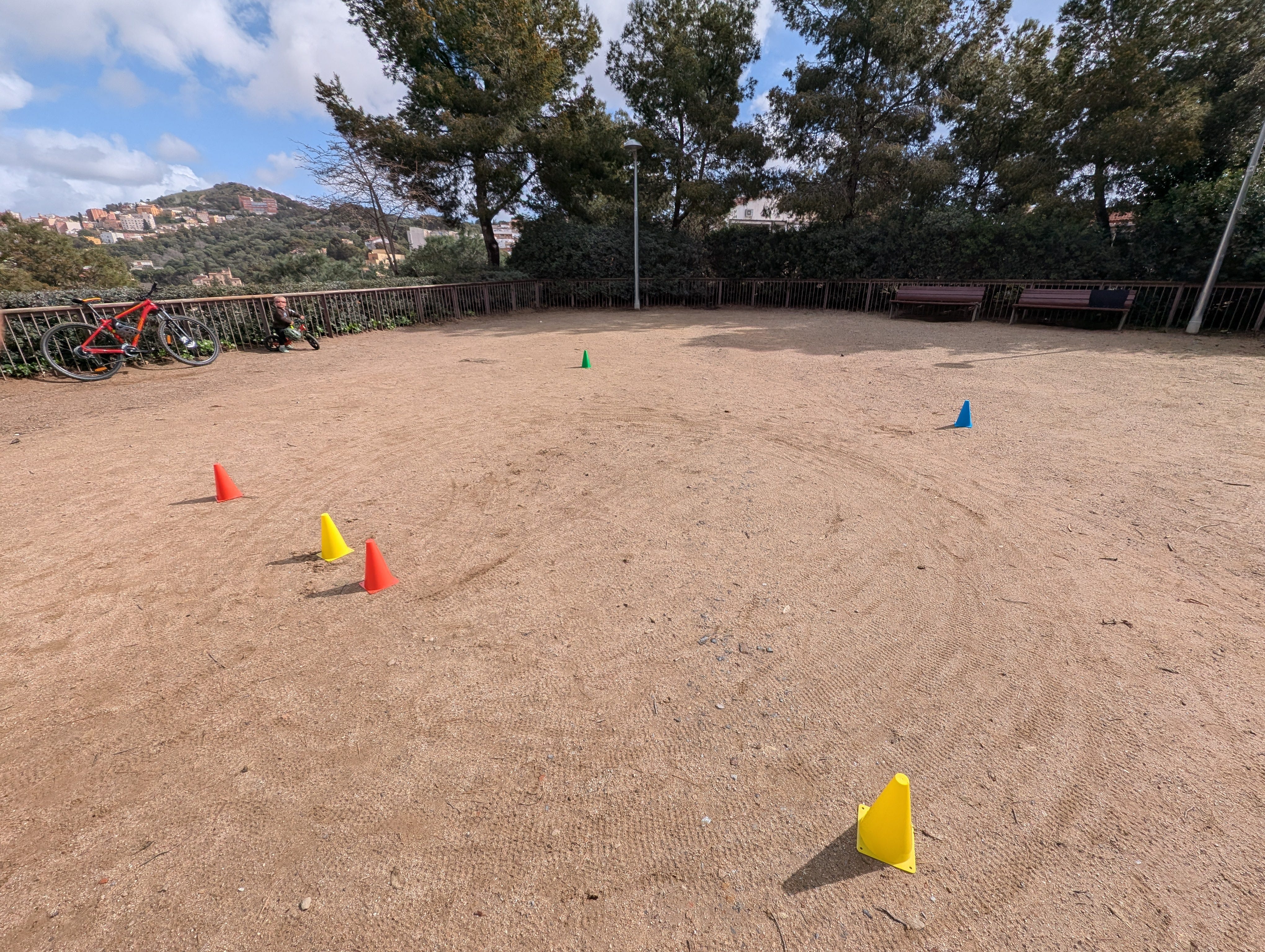
We didn’t head straight for the trails. That would be like deploying a refactored monolith to 100% of users without a staging environment. We set up a 3x3 meter “Sandbox” in a parking lot to run our first integration tests.
1. The Look-Ahead Buffer (The Square)
The first bug we encountered was Visual Latency. He was looking at his front wheel—the equivalent of a system only processing the data packet currently in the buffer.
The Fix: I implemented a new algorithm. Start at Cone 1, look at Cone 2. When the front wheel enters the zone between 1 and 2, immediately point the sensors (eyes) toward Cone 3. We were teaching him to process future state while executing current operations.
2. The I/O Interrupt v1.0 (Stop-on-Line)
We tested the “Stop” command with a simple line. At this stage, we kept the requirements low: just execute a HALT command exactly on the line. He passed this test without issues—the braking interface was working, even if it was still a bit binary.
Scaling the System (Weekend 2)
Once the basic “Look-Ahead” logic was cached, we increased the complexity of our tests.
2.1 The I/O Interrupt v1.1 (The “No-Touch” Constraint)
We refactored the stop-and-go drill. Now, he had to stop on the line and then resume driving without touching the floor. This was about refining balance and power delivery—moving from a simple halt to a complex state transition.
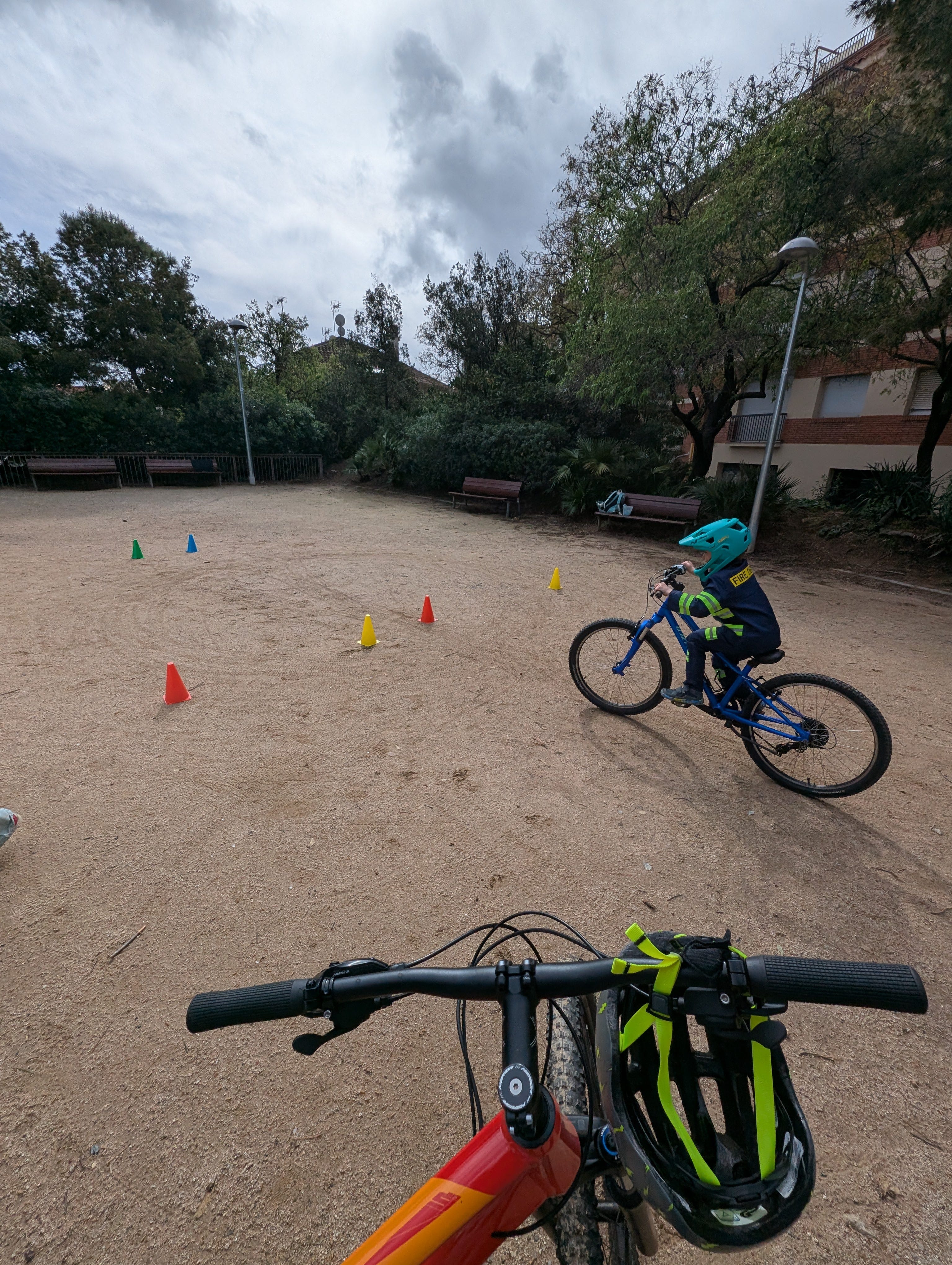
3. The Slalom (Logic Branching)
Finally, we introduced the Slalom. This was a true logic-branching exercise: navigating a sequence of four cones. It required high-frequency adjustments to his trajectory based on the “Look-Ahead” data he was now successfully processing.
The “Merged PR”: Managing the Developer Experience (DX)
The first weekend wasn’t a “success” by pure performance metrics. He failed several drills, the “build” felt shaky, and the cones remained largely un-navigated.
But here is the most important log entry: He didn’t get frustrated. In my day job, when a Junior Developer (or an AI agent like Jules) struggles with a new stack, the worst thing a Tech Lead can do is demand they stay until midnight to “fix the build.” That is how you accrue Human Technical Debt—you might get the code merged today, but you’ve poisoned the developer’s relationship with the codebase for tomorrow.
By applying a “Freedom of Decision” protocol and capping sessions at 15 minutes, we prioritized the Developer Experience. Because I didn’t push, he didn’t associate the new hardware with stress. We maintained a high “morale-to-output” ratio, ensuring he was excited to “reboot” the training the following weekend.
The Feature: By the end of the second weekend, something clicked. It wasn’t about completing the drills perfectly—it was about the feel. The “Look-Ahead” algorithm was finally running in the background, and he started to feel comfortable on the new hardware.
The Post-Deployment Cleanup: Ownership
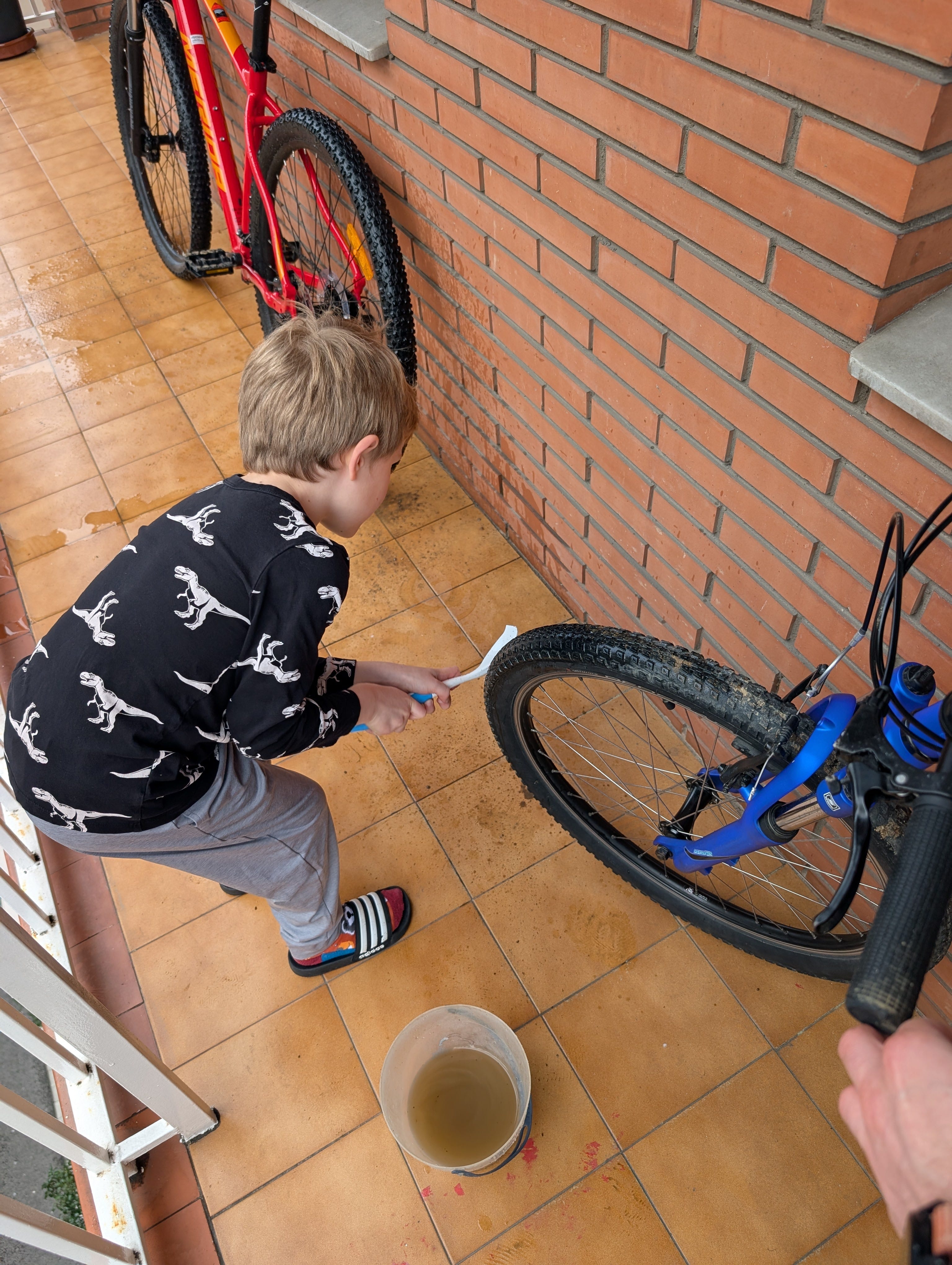
The real sign that the migration was a success came after the training was over. Without being asked, he started cleaning the bike himself.
In engineering, we call this Full-Cycle Ownership. It’s the moment a developer stops just writing code and starts caring about the health of the system they operate. Seeing a 5-year-old wipe down his own “hardware” after a successful sprint in the sandbox is the ultimate proof of engagement. He wasn’t just using the tool; he was owning it.
The Log:
Hardware: Specialized Hotrock 24 (LTS Migration).
Total Training Time: Two 15-minute sprints.
Bugs Fixed: Visual Latency (Front-wheel staring).
Post-Deployment: Automatic system maintenance (he cleaned the bike).
Emotional ROI: High. The goal isn't to go fast on day one—it's to make sure that when we finally hit the trails, the pilot feels like the system belongs to him.